
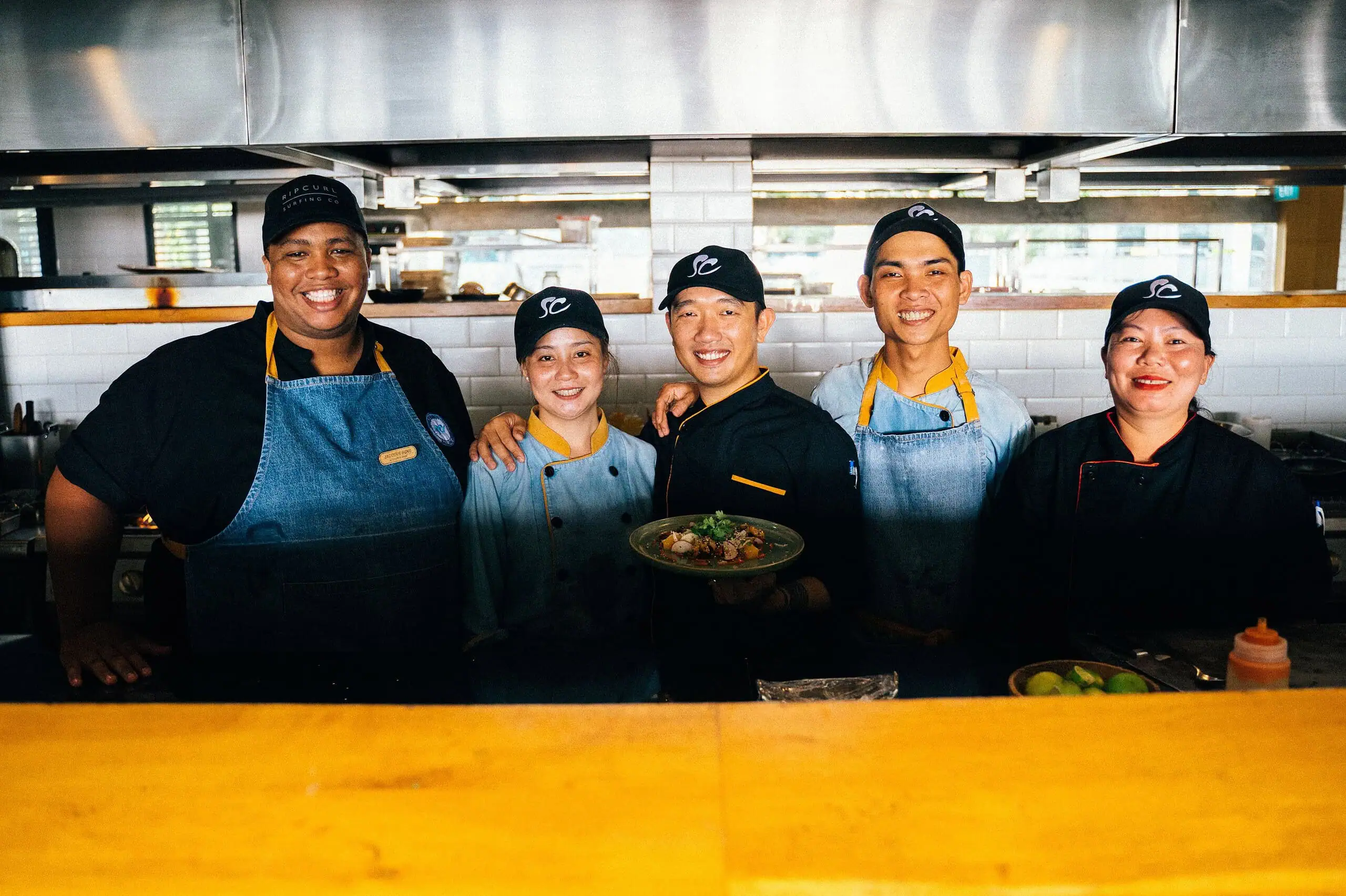
Filipino workers in Albania have moved from being a novelty to being a defining feature of the country’s hospitality, domestic care, and healthcare staffing landscape. In hotels along the Riviera, in private homes in Tirana, in beauty centers and clinics and restaurants across the country, the presence of Filipino staff has grown from scattered to widespread — and the employers who have worked with them are, with striking consistency, the ones most eager to hire more.
The Euronews Albania reporting on this trend captures what Albanian employers actually say about it: “We’ve focused on Filipinos because they are very hardworking, they understand their place and role well without infringing on the privacy of families or hotels.” That framing — professionalism, discretion, respect for boundaries — comes up repeatedly in accounts from hospitality directors, families, and clinic managers who have made Filipino staff a deliberate part of their workforce strategy rather than a one-time experiment.
Understanding why this is happening, what Filipino workers specifically bring to the roles they fill in Albania, and how the hiring process works gives employers the information they need to make a decision that hundreds of Albanian families and businesses have already made.
What Albanian Employers Are Actually Saying
The demand for Filipino workers in Albania is not driven by cost alone — though the cost structure is competitive relative to local staffing costs once turnover and training are factored in. It is driven by a specific professional profile that Albanian employers have found difficult to replicate through local or other international hiring.
Albanian employers who have worked with Filipino domestic and hospitality staff describe three qualities consistently: a service orientation that is deeply ingrained through formal training and extensive prior international experience; a discretion and professionalism in private household settings that families with children, elderly relatives, or simply a desire for household privacy find genuinely valuable; and a reliability that reflects the specific circumstances of overseas employment — a Filipino worker who has gone through the process of securing an overseas work permit, leaving their family, and relocating to Albania has made a significant commitment and is strongly motivated to perform well and maintain their position.
For families specifically — households looking for experienced nannies, elderly care assistants, or household managers — the Filipino domestic worker profile represents something that is difficult to source in Albania’s current labor market at any price: someone with formal training in child development or elder care, prior international household employment experience, English language capability that allows clear communication in a household that may include international family members or guests, and the cross-cultural adaptability that comes from having worked in multiple countries before arriving in Albania.
The Sectors Where Filipino Workers Are Making the Biggest Difference
Hospitality and Tourism
Albanian hotels, resorts, and food and beverage operations were among the first to bring Filipino workers into their teams, and they remain the largest employer category. The hospitality demand from this source country reflects a specific reality: the Philippines has one of the world’s most established hospitality training systems, with a significant percentage of its internationally mobile workforce having trained and worked in five-star hotel environments in the Gulf, Southeast Asia, and beyond before seeking placements in Europe.
A Filipino housekeeper who trained in a Dubai five-star hotel brings operational standards — bed-making precision, amenity presentation, room turnaround time, guest interaction protocol — that are the product of years of experience in demanding professional environments. A Filipino restaurant server who has worked on cruise ships brings the guest-facing communication, upselling confidence, and service tempo that distinguish a polished dining experience from an adequate one.
For Albanian hospitality businesses whose competitive position increasingly depends on meeting the expectations of Western European visitors accustomed to international service standards, Filipino staff are not just filling vacancies — they are raising the operational baseline of the teams they join.
Domestic and Private Household Care
This is the sector where the demand for Filipino workers in Albania has grown most rapidly in the most recent period, and where the profile match between what Filipino workers offer and what Albanian families need is most direct.
Families across Tirana and other Albanian cities are hiring Filipino workers for three primary domestic roles: childcare and nannying, elder care and home assistance for aging relatives, and household management for dual-income families who need reliable, professionally organized domestic support.
For childcare specifically, Filipino nannies and caregivers bring several advantages that are difficult to find in the local domestic staffing market. Many have formal training in early childhood education or child development from Philippine universities and vocational institutes. A significant proportion have prior nannying experience in international households — in Hong Kong, Singapore, the Gulf, or Europe — and bring the cross-cultural sensitivity that working in diverse family environments develops. English language fluency is standard, which matters both for families who communicate in English at home and for children who benefit from English-language exposure through their caregiver.
Elder care is an equally significant and growing application. Albania’s demographic profile is shifting — with significant emigration of working-age adults, many Albanian families find themselves with elderly relatives who need consistent, professional care support that cannot be provided by family members who are working or have themselves emigrated. Filipino care workers with training and experience in elderly care bring the patience, the skill, and the vocational commitment to this work that families need from a long-term placement.
Healthcare Support
Filipino nurses and medical support staff are globally recognized — the Philippines produces more internationally mobile nurses than almost any other country in the world, and Filipino healthcare workers have built professional reputations in the most demanding healthcare systems in the UK, the Gulf, and the United States. Albania’s healthcare sector, which is experiencing its own version of the emigration-driven staffing crisis affecting every other skilled sector, is increasingly drawing on this pool.
Filipino healthcare workers in Albania are placed in private clinics, wellness centers, rehabilitation facilities, and hospital settings where their clinical training, patient communication skills, and professional discipline make them immediately productive members of the care team. The Philippine nursing and healthcare education system is internationally benchmarked, and the credentials Filipino healthcare workers bring are transferable to Albanian practice with appropriate registration and orientation.
Why Filipino Workers Choose Albania
Understanding why Albania is an attractive destination for Filipino workers is part of what makes the hiring relationship sustainable — workers who are genuinely motivated to be in Albania, rather than treating it as a default or a last resort, produce better placement outcomes and higher retention rates.
Albania offers several genuine advantages as a destination for Filipino overseas workers. The cost of living is significantly lower than in Western European destinations, which means that Albanian wages — competitive by local standards — translate into meaningful savings for workers sending remittances to family in the Philippines. The country is safe, the people are warm, and the cultural environment is accessible in ways that some Gulf destinations are not. The growth of Albanian tourism and its emergence as a Mediterranean destination creates a hospitality sector that is expanding rather than contracting, which offers career development opportunities within the country rather than requiring workers to move on to find advancement.
Albania’s location — close to Italy, with good flight connections to multiple European hubs — also matters for Filipino workers who want to be within reasonable reach of the broader European community of Filipino overseas workers that provides social and cultural support during long overseas placements.
The Hiring Process: How It Actually Works
Hiring Filipino workers in Albania through a licensed recruitment partner involves a clear, documented process that protects both the employer and the worker throughout.
The process begins with the employer defining the role — the position, the responsibilities, the working hours and schedule, the salary, the accommodation arrangements if applicable, and the contract duration. This definition is the basis for candidate sourcing in the Philippines, where licensed recruitment partners work with accredited Philippine Overseas Employment Administration (POEA) agencies to identify and screen qualified candidates.
Candidate screening for Filipino domestic and hospitality roles includes verification of relevant training credentials and vocational qualifications, prior employment references from international households or hospitality employers, English language assessment, and an interview process that allows the Albanian employer to engage directly with shortlisted candidates before confirming a selection.
Once a candidate is confirmed, the documentation process begins: the work permit application through the Albanian Ministry of Labor, the employment contract preparation in compliance with Albanian labor law, the visa application process through the Philippine and Albanian government channels, and the pre-departure orientation that prepares the worker for the specific conditions of their placement in Albania.
The full timeline from initial engagement to the worker arriving and starting is six to eight weeks when managed by a licensed partner with established relationships in both systems. Fenix Consulting & Recruiting is licensed under LN-0987-01-2026 and maintains active recruitment partnerships in the Philippines that allow us to source qualified candidates efficiently for the full range of roles Albanian employers need to fill.
Our international staff recruitment services cover the complete scope of Filipino worker placement — from candidate identification and screening through work permit and visa management and post-placement support. We provide a replacement guarantee within the first three months of placement and maintain ongoing communication with both the employer and the placed worker throughout the contract period.
What Employers Need to Prepare Before Hiring
Albanian employers and families considering Filipino workers for the first time benefit from understanding what the placement requires from their side to produce the best outcome.
Clear role definition and written contract. Filipino workers entering Albania on a work permit are employed under a formal contract that specifies all material terms. Families hiring domestic staff should not underestimate the importance of this documentation — a clear, written agreement that specifies duties, working hours, time off, accommodation terms, and salary protects both parties and sets expectations that prevent misunderstandings after the worker arrives.
Accommodation arrangements. For live-in domestic placements, the accommodation provided is part of the employment terms and needs to be appropriate — a private room, access to basic facilities, and a degree of privacy that allows the worker to maintain their own life outside working hours. For hospitality placements where accommodation is employer-provided, the same principle applies. Accommodation that falls short of basic standards is one of the most consistent causes of early placement breakdown across all international domestic hiring.
Cultural orientation from both sides. Filipino workers arriving in Albania are adapting to a new country, a new cultural environment, and in many cases a new language. Employers and families who invest a small amount of time in cultural orientation — explaining household routines, local customs, Albanian family dynamics — create the conditions for a successful long-term placement. Fenix Consulting provides pre-arrival orientation for placed workers and advises employers on the practical integration steps that produce good early-stage retention.
Patience through the first month. The first four weeks of any international domestic or household placement are the adjustment period — for the worker and for the employer or family. Workers who are performing well at month three have almost always been through a first month that involved adjustments, questions, and recalibration on both sides. Employers who engage with this period as normal rather than treating early adjustment as a signal of failure consistently get the long-term results they were looking for when they started the process.
How Fenix Consulting Places Filipino Workers in Albania
Fenix Consulting & Recruiting has placed Filipino workers across hospitality, domestic care, and healthcare settings in Albania for multiple seasons. Our process is built around candidate quality — we source through accredited Philippine agencies with documented track records, screen candidates against the specific requirements of each placement, and support both the employer and the worker through the placement term.
If you are an Albanian family or business considering Filipino workers for the first time, or an employer looking to expand an existing Filipino staff cohort, explore our international staffing services and our global sourcing network to understand how we work and the countries we source from.
Then na kontaktoni with your specific requirements — the role, the setting, the timeline, and what matters most in the candidate profile. We’ll put together a sourcing plan and introduce you to qualified candidates within the framework of a fully compliant, documented placement process.
Fenix Consulting & Recruiting — licensed international recruitment for Albanian families and businesses, connecting employers with professional Filipino workers and international staff from 11 countries.