
Public transportation in Albania is affordable, widely available, and easy to use once you understand how it works — but it runs a little differently from what you may be used to, so a quick guide saves you confusion in your first weeks. If you’re relocating to Albania for work, getting around confidently is one of the first things that makes a new country feel manageable. From the shared minibuses that connect every town to the city buses of Tirana, here’s what foreign workers need to know to move around like a local.
Getting Around: How Public Transportation in Albania Works
The first thing to know is that Albania relies heavily on buses and shared minibuses rather than trains or metros. There’s no metro or tram system, and the railway network is essentially non-functional for practical travel — think of trains as a curiosity, not a commuting option. Instead, an extensive, low-cost network of buses, minibuses, and taxis covers the country. It’s inexpensive and reaches almost everywhere; it just rewards a little local knowledge, which is exactly what this guide gives you. Once you settle into a job through a proper placement in Albania, daily commuting is rarely a problem.
1. Furgons: The Backbone of Albanian Travel
The furgon — a shared minibus — is the heart of public transportation in Albania, especially for reaching smaller towns and villages. Furgons are privately run and operate on a “fill and go” system: rather than following a fixed timetable, they leave once they’re full. They’re cheap, frequent on popular routes, and often the only way to reach places regular buses don’t serve. Don’t expect much legroom or air conditioning, but do expect a genuinely local, social way to travel. Ask locals or your employer where the furgons to your destination depart from, as stops are often informal.
2. City Buses in Tirana
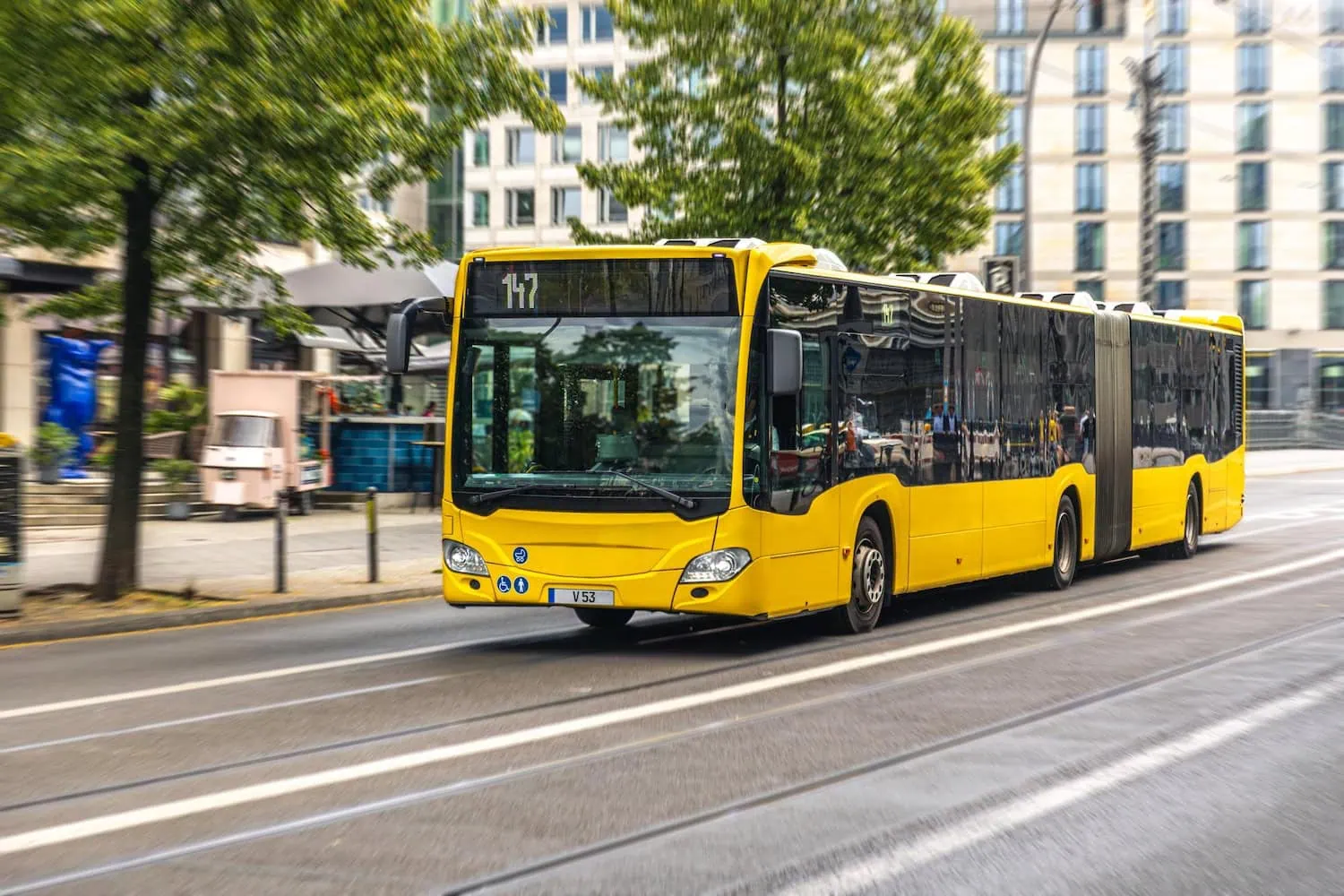
If you’re living in the capital, city buses are the face of public transportation in Albania and will likely be your daily ride. They cover the main routes across Tirana for around 40 lek per trip — extremely cheap — with good frequency during the day, though service thins out in the evenings. The single most important tip: always carry cash and small change, because card payments are rarely accepted and you usually pay a conductor on board. Once you learn the two or three lines that serve your home and workplace, the daily commute becomes simple and costs very little.
3. Intercity Buses for Longer Trips
For longer trips, public transportation in Albania between cities means intercity buses — reliable and affordable. They run on set departure times from main terminals, and you can typically buy your ticket directly from the driver or a terminal counter — advance booking is rarely necessary. Fares are low: you can travel halfway across the country for well under 1,500 lek, and the Tirana-to-Sarandë run, for example, takes around five hours. Keep small denominations handy, as drivers sometimes round fares up. These buses make exploring Albania on your days off easy and cheap.
4. Taxis and Ride-Hailing — Know the Reality
Here’s a point that trips up many newcomers: the big international ride apps don’t work here. Uber doesn’t operate in Albania, and Bolt no longer does either. Instead, licensed taxis operate in Tirana with meters, and local apps like Merr Taxi and Speed Taxi work within the capital. In unlicensed taxis or outside the main cities, agree the fare before you get in. Short rides within Tirana cost a few hundred lek, while an airport trip runs roughly 2,500–3,000 lek. Knowing this in advance saves you both money and the frustration of downloading an app that won’t work.
5. Budgeting for Transport as a Foreign Worker
The good news for your wallet: public transportation in Albania is one of the cheapest parts of life here. Daily bus commuting costs very little, and even regular furgon or intercity trips won’t strain a working budget. This affordability is part of what makes Albania comfortable to live in on local wages — a real advantage for foreign workers. Many employers arrange or assist with transport for staff, and accommodation is often located with the commute in mind, so ask about this when you accept a role.
6. Practical Tips for Your First Weeks
A few habits make public transportation in Albania effortless. Carry cash in small denominations, since most fares are paid in cash to a driver or conductor. Learn a few basic Albanian phrases or place names to ask for directions and stops. Use offline maps to track your route, as stops aren’t always clearly marked. Don’t be shy about asking locals — Albanians are famously helpful to newcomers and will happily point you to the right furgon or bus. And give yourself a little extra time in the first week while you learn the routes; after that, it becomes second nature.
Settle Into Life in Albania With Fenix Consulting
Getting around is just one part of building a comfortable life in a new country — and it’s an easy one once you know the ropes. Reliable, affordable public transportation in Albania means that as a foreign worker, you can live well and commute easily on local wages, focusing your energy on your new job rather than the logistics of daily life.
Fenix Consulting & Recruiting connects foreign workers with legitimate, fully supported employment across Albania, and helps you settle in with the practical guidance that makes relocation smooth. Explore the industries we serve and our global sourcing network, then na kontaktoni to find a genuine opportunity to build your career in Albania.
Fenix Consulting & Recruiting — licensed international recruitment connecting foreign workers with legitimate, fully supported employment across Albania. Transport details are general guidance and may change; confirm current routes and fares locally.